Decentralized Wireless Mesh: Bridging the Gap in Rural IoT Deployments
Picture this: I’m out in the middle of nowhere, managing a small-scale energy monitoring project in a rural valley. We’ve got sensors on wind turbines scattered across 50 acres, tracking performance data to optimize maintenance. Everything’s humming along—until it isn’t. One morning, I get an alert that half the sensors have gone dark. I drive out, expecting a hardware glitch, only to find the real culprit: our spotty cellular gateway dropped offline again. No internet, no data, no insights. It’s a classic rural IoT headache—connectivity is the Achilles’ heel of projects like these, where infrastructure is as scarce as a gas station on a backroad.
As a field operations manager, I’ve seen this story play out too many times. Rural areas are often a black hole for reliable internet. Traditional IoT setups rely on Wi-Fi or cellular hubs to relay data, but out here, you’re lucky if you get a single bar of service. Without a stable connection, your entire deployment—whether it’s for agriculture, energy, or environmental monitoring—can grind to a halt. So, how do you keep things running when the nearest cell tower is a county over? Enter decentralized wireless mesh, a game-changer for remote IoT projects.
Why Rural IoT Struggles—and How Mesh Solves It
The core issue in rural deployments isn’t the devices themselves; it’s the assumption that a central connection point will always be available. Most IoT systems are built around a hub-and-spoke model—sensors send data to a gateway, which pushes it to the cloud. If that gateway fails or loses internet, you’re dead in the water. I’ve had to manually retrieve data from SD cards on sensors because our gateway couldn’t reconnect for days. It’s not just inefficient; it’s a waste of resources when you’re already stretched thin.
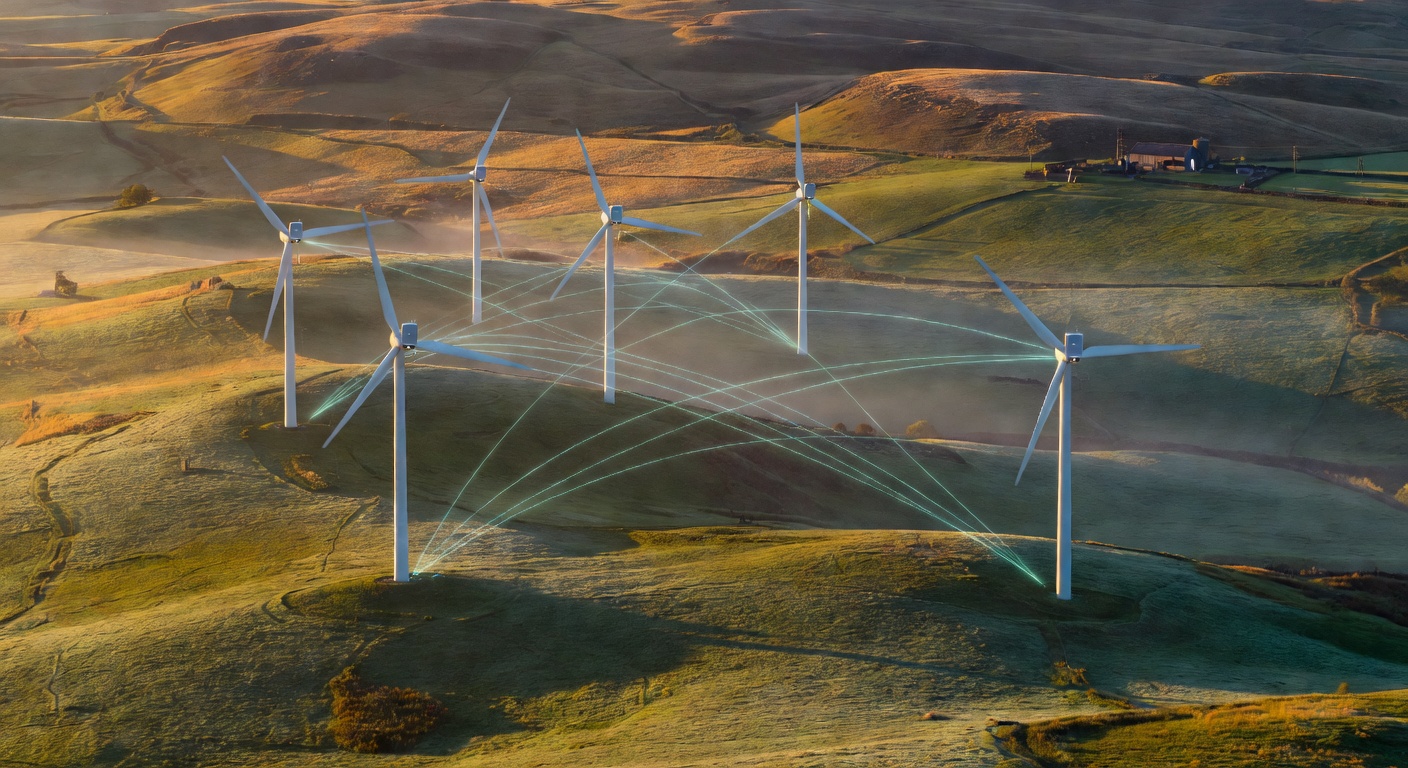
Decentralized wireless mesh flips this model on its head. Instead of relying on a single point of failure, devices talk directly to each other, forming a self-organizing network. If one node can’t reach the gateway, it relays its data through neighboring nodes until it finds a path. Think of it like a group of hikers passing messages down a trail—if one person’s out of earshot, the message still gets through via someone else. This device-to-device communication means your network can keep functioning, even if the internet is down or a node gets knocked out by a storm.
What’s more, this approach doesn’t just patch up connectivity gaps; it builds resilience. In that wind turbine project, imagine if my sensors could’ve relayed data through each other, hopping from one turbine to the next until reaching a gateway with a weak-but-usable signal. I wouldn’t have lost half a day’s worth of data—or half a day driving around troubleshooting. Mesh networks adapt on the fly, rerouting data as needed, which is a lifesaver in environments where conditions change faster than you can keep up.

Deploying Mesh in Remote Areas: Practical Tips from the Field
So, how do you make decentralized wireless mesh work for your rural IoT project? I’ve learned a few tricks over the years that can help maximize coverage and keep your network humming, even in the toughest spots.
First, map out your terrain before you deploy. Rural areas aren’t just flat fields—hills, trees, and barns can block signals. I once set up a network in a forested area, only to realize a ridge was killing communication between nodes. Use elevation maps or even a quick drone flyover to spot obstacles, and position your nodes to create clear lines of sight where possible. If you’ve got a tall structure like a silo, stick a node up there to act as a relay point—it’ll extend your range significantly.
Second, think about density. You don’t need a node on every single device, but you do need enough to form a reliable web. In my energy projects, I aim for overlapping coverage—each node should be in range of at least two others to ensure data can reroute if one fails. Start with a small cluster and test how far messages can hop before adding more. It’s a balance; too few nodes, and you’ve got dead zones. Too many, and you’re burning through budget and battery life.
Finally, prioritize resilience over speed. Rural deployments aren’t about real-time stock trading—most of the time, a slight delay in data delivery is fine if it means the network stays up. Configure your mesh to buffer data locally on nodes when connectivity is spotty, then forward it once a path opens up. I’ve had setups where data trickled in hours late after a storm, but it still arrived intact. That’s a win when the alternative is losing it altogether.
Decentralized wireless mesh isn’t just a tech solution; it’s a mindset shift. You’re building for independence, not reliance on infrastructure that might not exist. I’ve seen firsthand how it can turn a failing rural project into a success—keeping data flowing when everything else falls apart. If you’re tackling IoT in remote areas, it’s worth exploring how this approach can save you from the kind of headaches I’ve had one too many times.
Got a rural deployment on the horizon or struggling with connectivity in the field? Drop us a line at /contact/. We’d love to chat about how decentralized wireless mesh can keep your project on track, no matter where you’re setting up shop.